intake day

Your death bed was delivered today.

The delivery driver was wearing gauges,

and through his black mask he offered apologies after learning of your condition.

“She’s starting hospice today. Brain tumor.”

The delivery driver—

I never got his name—

moved quickly, assembling the bed with ease.

He handed me the remote control.

“This one brings up the head of the bed. This one…”

His words faded from my ears,

fading and away,

under the rising hum of the realization that others before you have passed away on this mattress,

an impermeable surface where no history is conveyed.


I thanked the delivery driver

(I never got his name),

And tipped him a hundred dollars and thanked him again.


Your death bed was delivered today,

and I’m standing before this loud machine,

staring blankly ahead into a white wall,

waiting for the linens to dry,

and the bed looks so small and lonely,

and the closer I get to losing you,

the more I feel so small and lonely.


practically always

We are still alive, but since the diagnosis, we now use the past tense to refer to the lives we now occupy. Every morning the sky is gray, and I hear her hacking cough crashing into walls. It reverberates everywhere. I remove the mask from my eyes, sit up, slouch forward, and the screen drip begins. Reddit. YouTube. Twitch. Twitter. Gmail. Yahoo Sports. Then rinse and repeat. Refresh. Rehash the same empty data that seems to serve no other purpose than feeding data and moving colors to a crippled brain. It's all just different colored distractions. It's something to push out the anxiety and grief and general unwellness. And since the diagnosis, I haven't worked. That's over four months. Since the diagnosis, I've been with her. Practically always. And slowly, day by day, I'm forgetting how to live. The routines are like slow nightmares. The anxiety has me twisting and turning, wishing to contort myself out of this scenario and into something whole and beautiful. Like it used to be. But there's no going back. It's a statistical anomaly, and there's no carcinogen to blame. No purposeful ingestion of something toxic. Just bad luck. Terrible luck. And so now she's planning her funeral and making arrangements. And I'm fearful of what it will look like on the other side of this. I'm wondering how I will shake the terror of living in a place void of you. A vacuum of time and space. Like a ghost sucking up all the air, it will hit me square in my chest. I'll barely stand steady, staggered, and gasping, and I...

But now-- right here-- we are still alive, but since the diagnosis, we occupy lives we never could have imagined.

the end of the end

Gray clouds like plumes of smoke tower overhead, nearly blotting the sun from the sky. And here we are in June, 17 days before the start of summer, and a hard snow begins to fall. In neighborhoods everywhere, people can be seen running. They’re all rushing to get home, eager to reunite with friends and family. Because everyone knows the end of the end is getting closer.
Everyone used to think the end would come as a fire from the sky, be it from nuclear weaponry or a meteor from space. The type of mass extinction event you see in the movies.
But that isn’t how it happens.
Day by day, the sun is slowly fading. Its death is occurring at a glacial pace,
so
slow
it
isn’t
discernible to the naked eye.


Remember when you thought you had time? Time to visit those distant islands? Time to visit Joshua Tree?
You and me.
Just me and you.
We’ll finally visit Paris. We’ve been putting it off for years.
We will climb the Eiffel Tower.
And there,
I will drop to a knee
and ask you to marry me
again.
And it will be the most beautiful thing we will ever see. So beautiful that decades later, we’ll find ourselves sharing tears of fondness. We’ll look at the photographs I took of the panorama of you and me.
And I’ll look at you,
and you will look at me
and smile.
We were so happy.
We were so young.


Remember when you thought you had the time to do all those things?
You don’t.
You never actually had the time.
Time is the reflection you see in the mirror,
gazing back at you,
but just for this moment.
A small moment of impermanence.
And in neighborhoods everywhere, a June snow falls, and people are rushing home to be with the ones they love.
Because the end of the end is coming. And it will be here sooner than you think.

an incomplete portrait

A body weakened by disease, she struggles to carry her bones up stairs that now appear steep and daunting. She grips the railing for support, and with every step she takes, a vacuum pulls the air out of the room until it is then released, and then, another step. How long can she go on like this, you ask yourself. How long until she becomes a phantom of this place? You will carry her memory with you; you will wear it like an invisible mask of impossible grief. But until then, you will be a watchman of time and decay. The mirror reveals to you a face that is aging beyond the scope of time; it is slowly contorting into an incomplete portrait of loss and pain, and a brow that appears heavy and swollen, as if it is there where all your troubles have taken residency. They’ve been with you for nearly a decade and have thereby become enmeshed within you; they’ve entangled themselves like a malignancy, embedded far too deep to ever be excised. You turn out the lights, pull down the sheets, and crawl inside. Your weary head lay softly on down and cotton. You close your eyes and think, What if all of this is just a bad dream...

cxr

Pulmonary nodules. The chest x-ray revealed findings consistent with pulmonary nodules. The growths are small and scattered, and they weren’t present four months ago. The nodules are “concerning for metastatic disease.” She gets off the phone with her oncologist and asks you questions. Your eyes have never strayed from her inevitable destination from the day of her diagnosis. But she held hope, believing in the miracle of remission. But now-- now everything has shifted. The frontier has changed, and borders no longer mean anything. Everything is now vulnerable to attack, and she’s asking you questions you’re too afraid to answer. You don’t know what to say. And you, in your calmer moments, still find it baffling that this is her life, your life, two lives together, bonded by love and now, united by tragedy.

It’s been days since the phone call, and now she sleeps all the time. You’ve pondered why. Is it the depression, spreading like the malignancy? Or is it the progression of the disease? Perhaps it’s both, and all of this is just the nature of things, a slow progression towards the eventual and inescapable outcome. So you sit here, staring through a window and into a thicket of trees and shrubbery. Various shades of green sway in no discernible direction. The trees and the blossoms and the flowers and us-- it’s all just fodder for the cosmos.

monologue

“So this normalization-- it’s a defense mechanism. You’re forced to normalize it; otherwise, every time it recurs, it’s like the raw shock and pain of the first assault. So you normalize it. Somehow you’re able to dial down the volume of it all. And after a while, it becomes just another experience, another piece of your life, mixed in with all the other pieces. There are good pieces. You really can’t remember those, though. The bad stuff pervades. It hovers. It clings to you. The happiness burns bright, for sure. But the darkness burns brighter. And longer. And so, years later, decades later, you look back at the abuse and think of it as-- yes, it was painful, but it’s simply something that happened. You really think: it’s just something that happened. You believe that your childhood experiences, the trauma-- you think that’s the rule and not the exception. But you’re wrong. You assume most everyone has a troubled childhood. You believe most everyone grows up in a dysfunctional home. But no. See, you’ve normalized it. It’s become internalized until one day you realize-- and begin to accept!-- your childhood was traumatic. Your experiences were terrible. Actual terror. And they altered the course of your life before you got the choice to choose otherwise. And those experiences, they’re still with you today. Only now you understand they manifest as the Anger (and its quickness!). The Anxiety. The obsessive traits. That pervasive feeling of brokenness. You now understand that your amygdala-- your amygdala has no chill! Those experiences altered its ability to appropriately assess the sensory input. You’ve got hair-trigger fight or flight. Everyone is a potential threat, so trust no one. What are their intentions? It’s best to just keep everyone away. Allow no one to come inside your mangled garden. Good news. There’s good news? Yes, you are in therapy and are thereby-- you’re beginning to understand yourself more thoroughly. You’re identifying the trauma. And accepting it. And in a perverse sense, you see A.’s situation and all its tragedy as an opportunity. A chance to start a new chapter with something with which you’ve never been familiar: optimism.”

“I’m falling apart so I can be rebuilt stronger and better.”

This morning

I woke up this morning and everything was grey. Grey and cold, everywhere. You are awake, but you feel stuck between a subtle nightmare and reality. There’s a lingering sense of unease. The anxiety is already churning in your gut, and you know there’s no going back to sleep. At least not this morning. You turn from side to side. You look at your phone, but nothing really registers. Tapping icons and scrolling pages. None of it makes sense. And none of it is pertinent to this moment. It’s just something for your brain to chew on, to occupy, temporarily, that empty space inside. But you get out of bed and realize the emptiness is everywhere. You take your morning piss, and here you are, again. Expelling waste products from your body. The kidneys filter and process, and you feel like an old machine. A machine that became obsolete months, years ago? You make your way down the stairs, and there she is: your wife, your everything, and she’s in her usual position on the couch. She turns to look at you and puts forth the best smile she can, but the sadness on her face-- like the cancer in her brain, the sadness is claiming new territory on her face. You can’t exactly pinpoint how she looks different, but her appearance punches you in the gut, in the same place the anxiety churns. So you make your coffee and stare at the small collection of dishes in the sink. You drink your coffee, which has suddenly gone cold. You eat your plastic food. The body continues to process what you feed it, but it all feels pointless. Like a machine aged to obsolescence, it relies on routine to simply exist. Your brain, however, is locked. The gears don’t move, and everything is locked. Frozen in place. And the grey and cold. It’s everywhere.

You are here

You stare blankly ahead at a mess of leaves and limbs. Your eyes eventually gaze out, and what you see becomes a smeared palate of moving colors and shifting shadows. Your eyes are out of focus, and you become aware of the breath sneaking in and sneaking out of your body. You feel your chest rise and fall with the rhythm of the diaphragm. And none of this makes sense. You observe your thoughts, and then a ghost appears. The apparition is a memory of your mother’s house. It’s 2008, maybe 2009, and it’s springtime, and there you are, seated on the porch next to Sister. A soft breeze floats across your face, and there’s anger inside of you. Denial manifests itself as anger, and you’re still grieving the loss of Sister. The woman sitting next to you isn’t her. This damaged soul’s descent into a drug-induced hell was well underway, and she had changed, seemingly from within. Arrests, jail time, plea bargains and a stint in drug court, and eventually prison. In a prison in Plainfield she would write you a letter. She had found god. She realized where she had erred. And once she was out of that place, she would make things right, rededicate herself to motherhood and focus on raising her son. But god never sticks, and the taste for illicit chemicals always returns. And then dad died. Stepdad would pass nine months later (I hope it was painful for him). And thirty days later, mom, crippled by losing the other half of her co-dependency, would die. And three months later, dearest sister would be found, dying, by police officers conducting a welfare check. She died in an emergency room after CPR became a meaningless exercise. And the apparition disperses. And you are sitting here, now, gazing into shades of green shifting, as your chest moves in tandem with your diaphragm. And you realize the peculiar nature of memory and appreciate its power and magic. “Dinner’s ready,” your wife says, her voice breaking your gaze.

And you are here.

Become unrestrained

She had a headache today. It was mild, and two tablets of Tylenol resolved it, but she had a headache today. Before A. got the diagnosis, she was plagued by headaches. Many severe and unrelenting. So is this the beginning? Is the tumor beginning its new march now that the assault of radiation has ceased?

You wonder how soon she will be taken from you. You kiss her goodnight, and as you pull away from her you keep your eyes on her. Could this be our last night together?

Soon afterward she’s sleeping and the gravity of everything comes swelling through your placid exterior. Your vision becomes blurred and the swelling continues to bubble, so you quickly leave the bed, then the room, and you find a distant corner in the home you share and you become unrestrained. Everything comes pouring out. Your heart rate accelerates and everything is coming at you and nothing is stopping it just keeps swelling and rising and you don’t know how you’ll make it to the next minute and then DONE. Everything settles. You grab a tissue, dab your eyes and blow your nose. You swallow a beta-blocker, take a deep breath in, then push everything out until your belly is clenched. I’m fine. I’m OK. And you crawl back into bed, cover yourself, and try not to be terrified about what comes next.

Sadboy

You listen to sadboy music with the lights down low and a candle burning on the nightstand. Sitting in bed, alone, you gaze at the wall ahead of you, thinking about all that lies ahead of you.

So much pain.

And the grief is overbearing.

You’re drinking whiskey, straight no chaser.

You’re drinking whiskey, something to chase, or maybe temporarily displace, a seething mass destined to destroy you, so you take off your tee shirt and beat your chest.

You arch your spine to thrust forth your sternum. And you beat your chest and scream at the gaping chasm of the cosmos, challenging it to strike you down where you sit, alone,

on a bed with the lights down low.

Nudged from a pier, you are now on your own

Today was A.’s final day of proton radiation. She will undergo an MRI in a couple of weeks to assess the tumor’s status and will likely begin another regimen of chemotherapy following that. Last week she completed the first cycle of chemo, which consisted of six weeks of vincristine. Her last dose of vincristine was canceled due to side effects, however. Her oncologist was pleased that she got five out of six doses, so that’s a win for her.

Today is bittersweet. A. can receive no further radiation, and her oncologist characterized that line of treatment as the best weapon against this aggressive tumor. She now has expended her last bullet and must now rely on chemotherapy, which can certainly slow the tumor’s growth, but that therapy is less focused and carries with it myriad side effects that can limit its use. How will the tumor behave now that the precision protons are gone? How many “good days” do we have left?

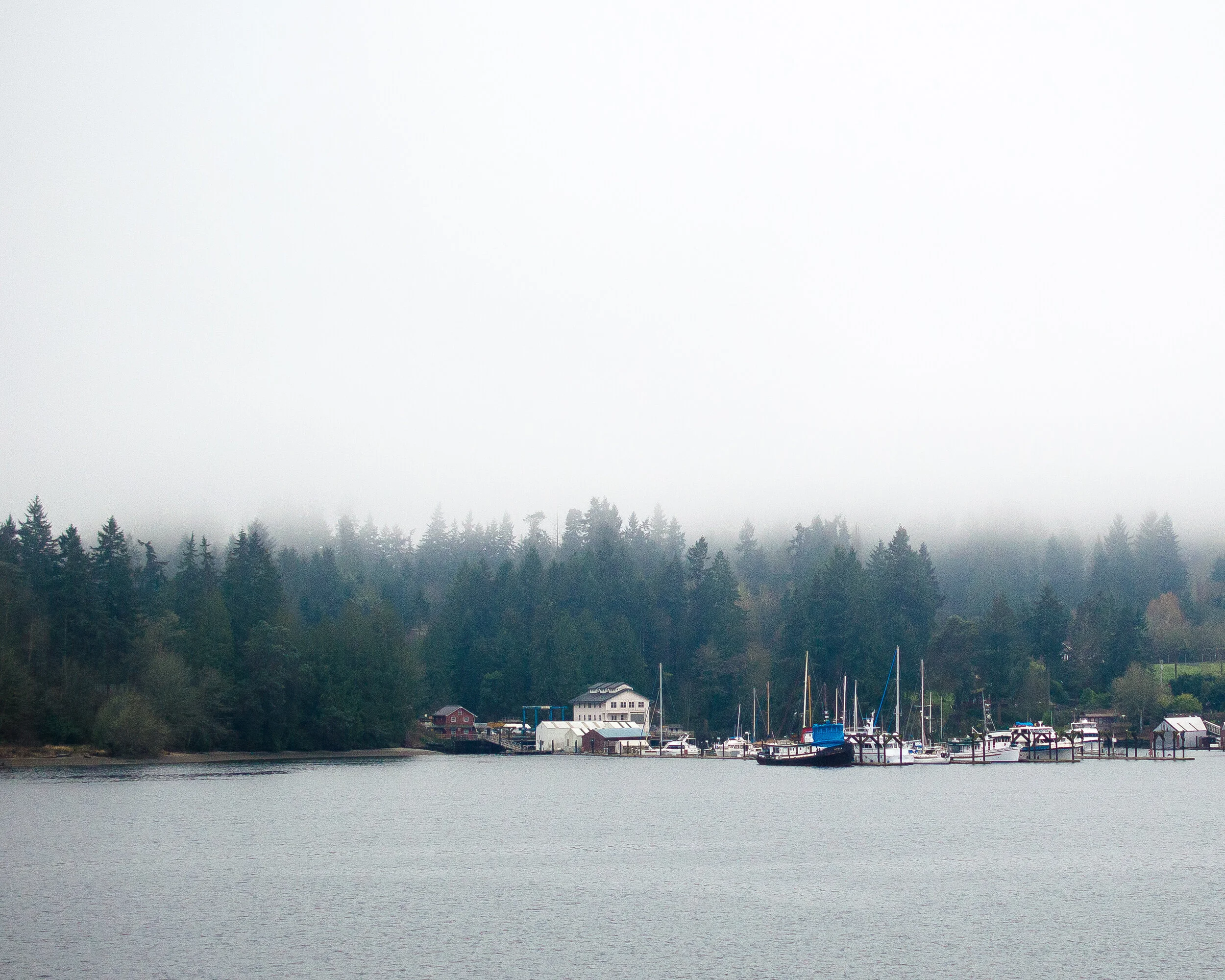
As I write this A. and I are joyriding a ferry to Bremerton. I’m typing and she’s knitting. Once we arrive, we’ll reboard the craft and head back to Seattle. I can remember our first ferry ride after we arrived here in 2014. It was a special trip for both of us; neither of us had ever been on a ferry, and riding one was one of our first Seattle experiences. We rode to Bainbridge Island. Shopped a little. Grabbed a bite to eat. It was a nice day. Today’s voyage is a celebration of sorts. A welcomed break from the norm now that her five-days-a-week treatment is finished.

I’ve spent the last ten years of my life with A. When you spend that amount of time with someone, they color nearly every facet of your life in ways you could never imagine. For the rest of my days ferries -- just the idea of a ferry -- will be colored by my days with A. I will remember this trip. I’ll remember our first ride. At some point, once I return back to work, a patient is sure to mention something about a ferry, and A. will then be there, inside my mind, a memory from a different life.

Affirmations

I am falling apart so I can be rebuilt stronger and better.

I admire the strength I didn’t know I had.

I can be kind to myself.

I can forgive myself for the mistakes I made when I didn’t know better.

It’s ok to take care of myself first, that will give me the strength that I need to help ___.

— from Therapist 02/07/2022